Services · Harris Park, Sydney
App, web and UX/UI services under one roof
Most studios do one thing well and subcontract the rest. We cover the full path from research through design to code, so fewer handoffs and fewer places for intent to get lost.
What the four services actually cover
Mobile apps
iOS and Android, most often React Native so one codebase serves both platforms. Native work where a platform capability or a specific performance area is the whole point.
Websites
Structure first, then mobile-first design up to larger screens. Built on WordPress, Webflow, or fully custom, depending on who edits it and what it has to integrate with.
E-commerce and UX/UI
Store builds where merchandising, product detail and checkout are engineered together, and design work scoped around the research, flows or interface that is genuinely missing.
Mobile app development
We build apps for iOS and Android, most often with React Native so a single codebase serves both platforms. That approach suits products with a defined feature set, a need to ship on two platforms at once, and a roadmap that will keep changing after launch.
Native work makes more sense when the app depends on platform-specific capabilities, or when performance in a specific area is the whole point of the product. Either way, we start with user flows and a clickable prototype before writing production code, because changing a flow in Figma costs minutes and changing it in a shipped app costs a release cycle.
Typical first build
- Discovery and user flows Who the app is for, what the first session has to do, and where accounts, payments or sync enter the picture.
- Clickable prototype Screens linked into a flow you can tap through, tested before any production code is written.
- Build and release React Native implementation, store submission, and the handover notes your team needs to keep shipping.
Cross-platform builds and when to avoid them
Works well for
React Native has a large ecosystem and shared component patterns, which shortens the path from prototype to a working build. For most MVPs and internal tools, cross-platform is the practical choice. It gives you one team, one release schedule, and a codebase that does not fork the moment a second platform ships.
Where it strains
Deep background processing, unusual Bluetooth behaviour, or heavy real-time graphics can turn the cross-platform layer into friction rather than speed. We flag that during discovery rather than discovering it in month four, and if the answer is that you need native, we will say so plainly.
Responsive website development
A website build starts with structure, not visuals. Which pages exist, what each one is for, how they link, and what a visitor is meant to do next. From there we design mobile-first and work up to larger screens, which tends to produce cleaner layouts than the reverse.
Builds are typically on WordPress where a content team needs editorial control, on Webflow where launch speed matters more than backend flexibility, or fully custom where performance and integration requirements rule both out. We recommend one and explain the maintenance implications of each, including who can edit the site after launch and what breaks first when nobody owns it.

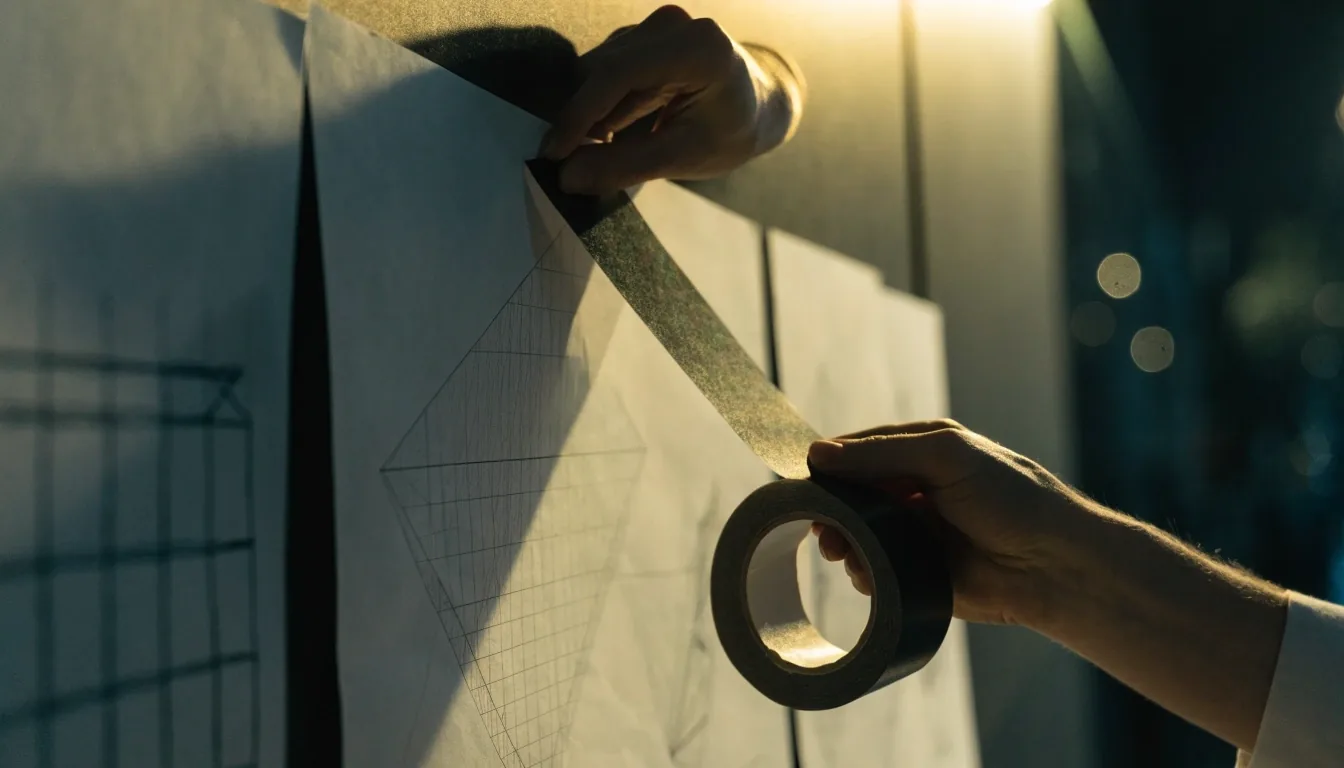
A web build usually starts on paper before it starts in a browser.
E-commerce development
Store work is a mix of merchandising, content and engineering. Product pages need the information customers ask for before they buy: dimensions, materials, delivery windows, return conditions. Category pages need filtering that behaves on a phone. Checkout needs to work when someone switches apps mid-payment.
We build stores on established platforms and custom front ends, and we set up only the payment methods your business can actually support, such as invoice and bank transfer, cash on delivery, or card taken in person at pickup. Nothing is switched on that you cannot settle or refund the same day.
UX/UI design services
UX/UI work covers research, information architecture, user flows, wireframes, prototypes and visual design. In practice, projects need different amounts of each, so we scope the design phase around what is actually missing rather than running a fixed package.
A product with an unclear structure needs flow work before anything else. A product with a clear structure but a dated interface may need visual and component work only. Figma is our working environment, with shared libraries and Dev Mode supporting handoff to whoever writes the code.
What a design phase can include
- Research and interviews with the people who use the product
- Information architecture and the page or screen map
- User flows and wireframes for the paths that matter
- Clickable prototypes and usability testing
- Visual design, components and developer handoff
Design systems and component libraries
Components with defined states
Buttons, fields, cards and navigation built in Figma with their hover, focus, disabled and error states drawn, not assumed. Spacing and type scales are set once at the component level.
Documented implementation
Each piece carries a note on how it should be built, so a new screen assembles from existing parts instead of being designed from nothing.
Accessibility held at the base
Contrast, focus states and touch target sizes get decided once, instead of being re-argued on every new screen a year later.
A design system is the difference between a consistent product and one that drifts with every new page. Teams that adopt one usually find the second year of development cheaper than the first, because new screens assemble from existing parts rather than starting from a blank frame.
Accessibility and WCAG work
Accessibility shows up in audits, procurement requirements and, increasingly, in Australian regulatory expectations. WCAG covers four broad principles: content should be perceivable, operable, understandable and robust.
In practice that means alt text on meaningful images, keyboard paths through every interactive element, forms that announce errors correctly, and colour contrast that passes at the component level rather than screen by screen. We handle accessibility as part of design and build, and we also take on remediation work for existing sites and apps where a review has already flagged issues.
Perceivable
Alt text on meaningful images, contrast that passes, content that still reads when zoomed or when colour is unavailable.
Operable
A keyboard path through every control, focus that is always visible, and touch targets sized for a real thumb.
Understandable
Forms that announce errors correctly and in plain language, labels that stay attached to their fields, consistent navigation.
Robust
Markup that assistive technology can parse today, and that survives the next round of component changes.
Conversion-focused design
Conversion work starts with evidence: analytics, session recordings, support tickets, and conversations with the people who handle customer questions. Then it is about removing friction in order. Fix the flow before the button colour. Make the value clear before adding urgency. Write the delivery and returns information before adding a trust badge.
We do not use countdown timers or invented stock warnings, partly because they damage trust and partly because they do not survive contact with returning customers. A page that has to trick someone into a purchase is a page that gets refunded later.
Order we work in
- Flow Can a visitor get from landing to done without a dead end or a step that asks for something too early?
- Clarity Does the page say what is being sold, to whom, and what happens after the click?
- Confidence Delivery windows, return conditions and contact routes, written plainly before anything decorative.
- Only then, polish Visual refinements last, once the order of the page is doing its job.
Which engagement fits your stage
Early-stage products usually need discovery and a prototype before a full build. Established businesses with a working site often need a focused redesign of specific flows rather than a rebuild. Internal teams with a designer in place sometimes just need development. We will tell you which of these you look like, and if the answer is that you do not need us yet, we will say that too.
Questions we get before a project starts
Can you take on one service without the others?
Yes. Plenty of projects start at one point on the path, whether that is a design phase for a team that already has developers, a build from an existing Figma file, or an accessibility review of something already live. The value of the full range is that you do not have to re-explain the product when you move to the next stage.
How do you decide between React Native and native apps?
During discovery, by looking at what the app has to do rather than what is fashionable. Defined feature sets that need to reach both stores at once usually suit React Native. Deep background processing, unusual device hardware behaviour, or graphics-heavy real-time work usually point to native. We explain the trade-off in writing before you commit to either.
Which platform will my website be built on?
It depends on who edits the site and what it has to connect to. WordPress suits a content team that wants editorial control. Webflow suits a launch where speed matters more than backend flexibility. A fully custom build suits performance or integration requirements that rule both out. Each comes with different maintenance implications, and we go through those before the build starts rather than after.
What payment methods can you set up on a store?
Only the ones your business can actually settle. That is typically invoice and bank transfer, cash on delivery, or card taken in person at pickup. We write the delivery, shipping and returns wording alongside the build, because those pages are part of the checkout as far as a customer is concerned.
Can you work with our existing designers or developers?
Yes, and it is a common arrangement. We can design into your existing library, build from your files, or document a handoff for a team that takes the work in house. Shared Figma libraries and Dev Mode keep that exchange readable on both sides.
Not sure where you fit?
Tell us where the product is stuck
A short conversation usually settles which service you actually need. Bring the stage you are at and what is not working yet, and we will say plainly whether it is a design question, a build question, or nothing that needs a studio at all. Based in Harris Park, working with teams across Australia.
Suite 1, Shop 1, 7F Parkes Street, Harris Park, NSW 2150, Australia
Monday to Friday, 9:00 AM – 6:00 PM
+61 2 8015 6419 · [email protected]